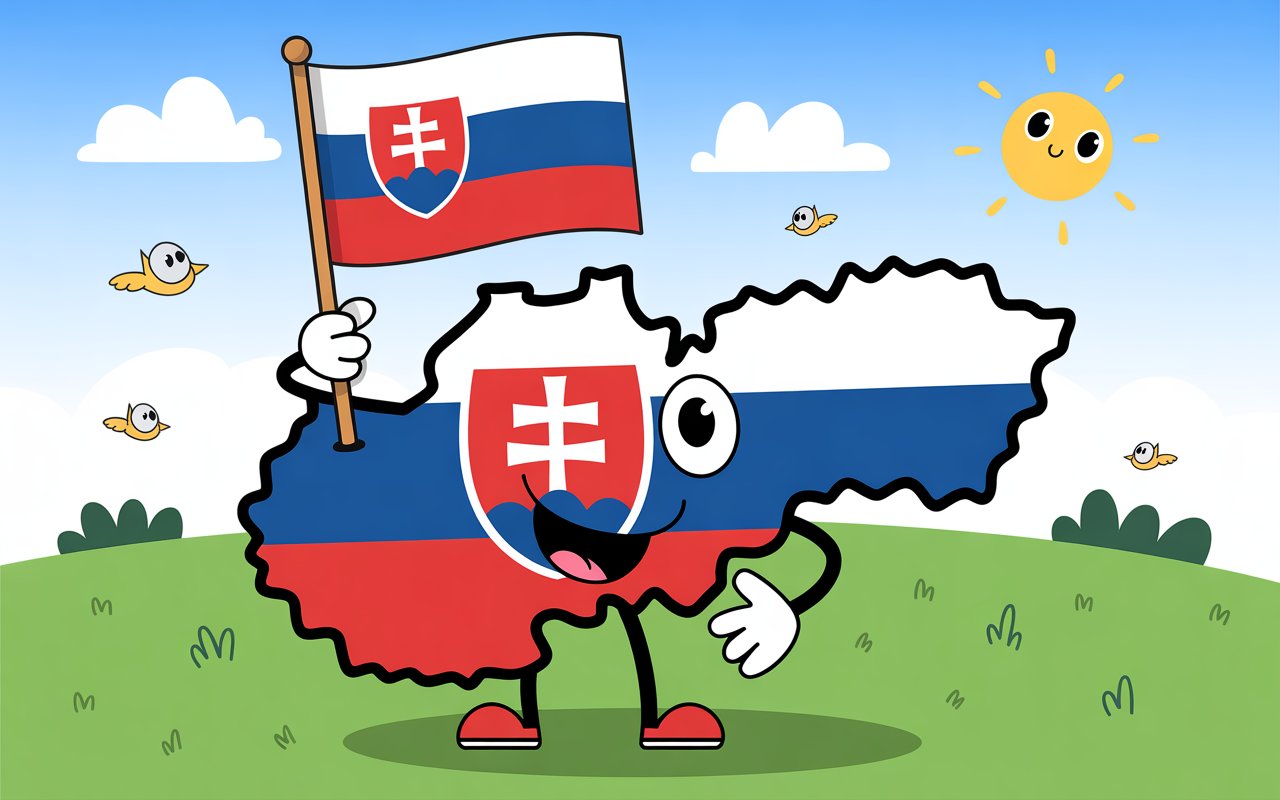
“Why does every noun have 7 costumes?”
Learning Slovak is like unlocking a secret European level nobody warned you about. It’s not the “order a coffee and survive” language like Spanish or Italian. Slovak shows up like: “Welcome. Here are seven cases. Try not to panic.”
But here’s the twist: it’s actually logical. Suspiciously logical. Like a puzzle that pretends to be chaos at first.
🌍 Where does Slovak live in the language family tree
Slovak belongs to the Slavic family — the “we understand each other… until we don’t” group:
- Czech (basically Slovak’s confident sibling)
- Polish (Slovak’s chaotic cousin)
- Russian (the intimidating one at family dinners)
- Ukrainian (the elegant one)
- Croatian (the holiday cousin)
If you already speak one Slavic language, Slovak will feel like déjà vu… but slightly drunk.
It’s often called a “bridge language” because Slovaks can understand bits of many Slavic languages without trying too hard — which is both impressive and mildly unfair.
😌 The good news (yes, there is some)
- Pronunciation is honest. You read it → you say it → it behaves. No betrayal.
- Grammar looks scary but has patterns. Like a video game boss you eventually learn to beat.
- Vocabulary connects over time. One root → suddenly ten words unlocked.
- Locals are supportive. Because anyone learning Slovak deserves emotional recognition.
And the best part:
👉 Slovak has only 3 tenses
- Prítomný čas = present
- Minulý čas = past
- Budúci čas = future
That’s it. No tense drama. No emotional breakdowns like English or Spanish.
😵 The “why is this happening” section
Now for the slightly chaotic part:
- Cases (Pády = 7) → words change depending on role in the sentence
- Gender → masculine, feminine, neuter (because why not)
- Verb aspects → one verb is never enough, apparently
- Flexible word order → grammar suggests options, confusion chooses the final one
For English speakers, it feels like:
“Why does every word keep changing personality?”
For German/Russian speakers:
“Ah. Yes. I recognise this suffering.”
🔄 Declension & conjugation (don’t panic yet)
This is where learners briefly question their life choices — but it’s actually logic disguised as chaos.
- Skloňovanie (declension) = nouns/adjectives changing through cases
- Časovanie (conjugation) = verbs changing depending on who is doing what
Examples:
- žena → ženy → žene → ženu
- robiť → robím → robíš → robí
At first, it feels illegal.
Later: normal.
Eventually: weirdly satisfying.
🏛️ Why Latin kind of helps
If you suffered through Latin at school and thought it was useless, congratulations — it might finally pay rent.
Because Slovak is basically:
- cases ✔
- declensions ✔
- agreement rules ✔
- flexible word order ✔
Latin learners often reach the conclusion:
“Oh. So Latin never died. It moved to Slovakia!”
But let’s be accurate:
While Latin is a Romance language, Slovak is a Slavic language. They are not siblings — more like distant relatives who show up at the same chaotic Indo-European family gathering and pretend they don’t know each other.
However, Latin still helps because both languages share structural habits.
So Latin learners often think:
“This feels familiar… emotionally stressful, but familiar.”
⚖️ Quick language comparison
- Slovak → modern, logical case system
- Latin → ancient, complex case system
- English, Spanish → no cases, but a ton of tenses to compensate
- German → simplified case system with discipline
- Russian → Slovak’s intense cousin who speaks faster
🤯 The surprise ending
At first, Slovak sounds like someone dropped a bag of consonants:
- štvrť
- zmrzlina
- vlk
It looks like language chaos. But then your brain adapts.
Suddenly, Slovak stops sounding impossible and starts sounding… expressive. Even slightly beautiful.
And here’s the real advantage:
👉 Not many people learn Slovak, so even basic effort gets instant respect.
Slovaks genuinely appreciate foreigners trying — probably because they know their language is not designed for beginners.
And that’s part of the charm.
Here is the question for you: Can you survive the chaos? If yes, then read How to Learn Slovak (Without Losing Your Mind)
