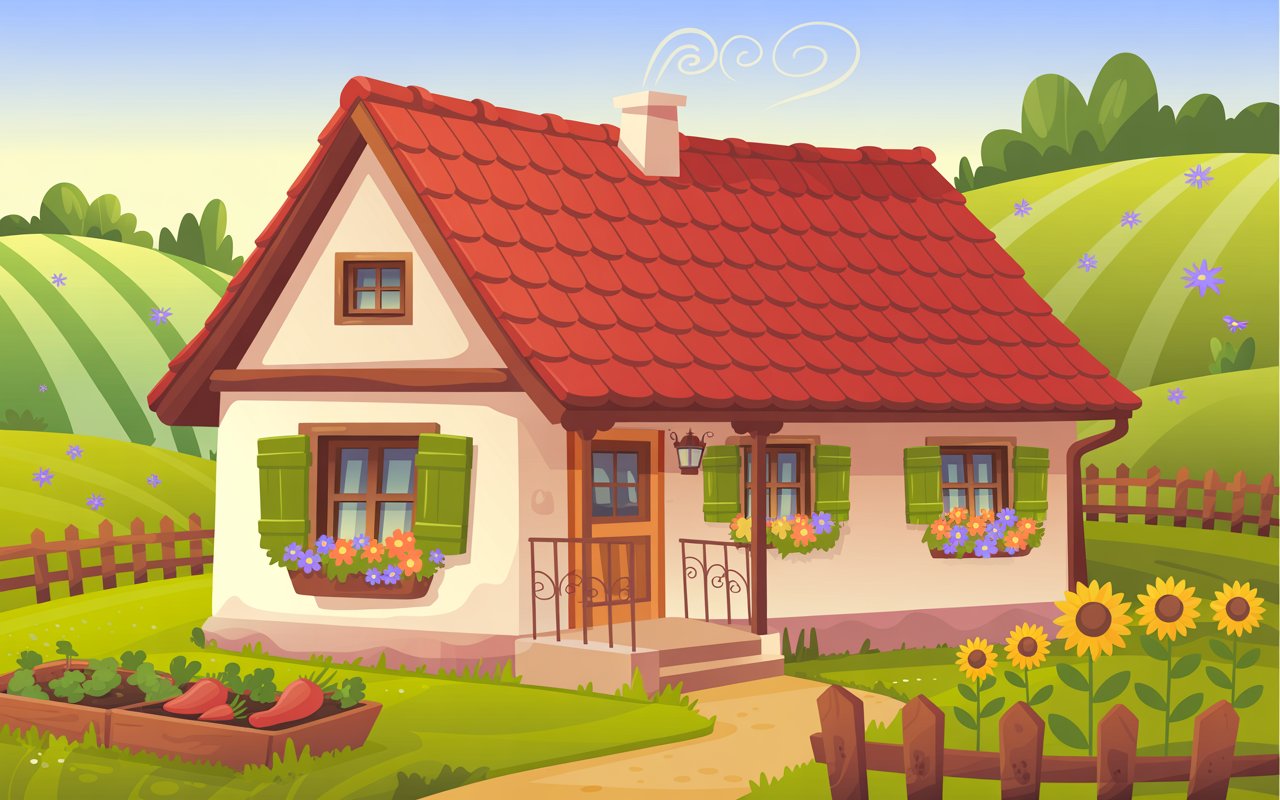
„Neboj sa, bude to dobré,“ said my boyfriend Peter as we were approaching the front door of his parents’ house.
„Ja nehovorím dobre po slovensky,“ I said, trying not to panic.
„Nevadí, naučíš sa,“ he smiled.
„Ahojte!“ The door opened and there stood a young girl, greeting us.
„Vitajte u nás.“ His parents joined in.
„Dobré ráno,“ I said politely, rather proud of myself.
„Dobrý večer,“ whispered Peter and winked at me.
„Prepáčte, dobrý večer,“ I corrected myself quickly.
Oh my god — we are starting really well, the first word is already wrong.
Dobré ráno for morning, dobrý večer for evening, dobrý deň for daytime.
I repeated the greetings in my head.
I wish I could just say ahoj, but Peter warned me that it is too informal and I can only use it with friends.
Ahoj for one person, ahojte for more than one.
I might teach them English faster than they teach me Slovak. I am going to dieeee.
„To je v pohode. Ja som Petrova sestra, Jana.“ The young girl introduced herself.
„Hovoríš po slovensky?“
„Trochu. Učím sa po slovensky. Pomôžeš mi?“
„Jasné.“
From that moment, she was in charge of the whole situation.
👨👩👧 Toto je moja rodina (This Is My Family)
„Toto sú naši rodičia. Mama sa volá Eva, otec sa volá Ivan. Náš pes sa volá Rex a naša mačka sa volá Micka.“
„Teší ma,“ I said.
„Ja som Eva, rada ťa spoznávam.“
„Ja som Ivan, teší ma.“
And before I could say anything else to his parents, Jana started her interrogation.
„Ty sa ako voláš?“
„Ja sa volám Sarah.“
„Koľko máš rokov?“
„Mám 25 rokov.“
A ty máš rokov?“ I shot back.
„Ja mám 10“.
❓ Odkiaľ si? (Where Are You From?)
„Odkiaľ si?“
„Som z Írska.“
„Z akého mesta si?“
„Prosím? Nerozumiem.“
„Nechaj ju,“ Peter stopped the little girl’s questioning.
„Chcem vedieť, z akého je mesta,“ insisted Jana. „Je z Dublinu?“
Aaah, now I know what she wanted — the town I am from.
„Nie, som z Cork.“
„Hovorí sa z Corku,“ little Jana corrected me.
That reminded me of course of all the changing word endings that exist just to confuse the hell out of me.
„Čo robíš?“
„Nič.“
„Ako nič?“
„No… nič.“
I looked totally confused at Peter, begging for help.
„Ona nikde nerobí?“ Jana turned to Peter.
„Ale áno. Robí. Je učiteľka.“
„Učiteľka… aha!“ I remembered the word.
„Prepáč, nerozumela som. Som učiteľka. Učím anglický jazyk v škole.“
„Super. Tak naučíš aj mňa?“
„Dobre, naučím. A ty ma naučíš po slovensky.“
„Samozrejme. Budeme sa učiť spolu. Platí?“
„Platí.“
The next thing I know, she grabs my hand and drags me to the table.
🍽️ Poď so mnou! (Come With Me!)
„Poď so mnou!“
She sits me next to her at the dinner table, and I know the intensive language immersion learning has begun.
„Neboj sa, jeden, dva poháriky slivovice a budeš rozprávať jedna radosť.“
I only understood Neboj sa, but with the confidence of an undefeated warrior, I replied:
„Nebojím sa!“ but maybe I should.
POĎME NA TO!
📘Slovník (Phrase Glossary)
| Slovak phrase | English meaning | Explanation |
|---|---|---|
| Neboj sa | Don’t be scared | Used to reassure someone |
| Ja nehovorím dobre po slovensky | I don’t speak Slovak well | Basic self-expression when learning |
| Nevadí | It doesn’t matter / no problem | Very common polite reply |
| Naučíš sa | You will learn | Encouragement phrase |
| Ahojte | Hi (to more than one person) | Informal group greeting |
| Vitajte u nás | Welcome to our home | Polite welcome phrase |
| Dobré ráno | Good morning | Morning greeting |
| Dobrý večer | Good evening | Evening greeting |
| Prepáčte | Excuse me / sorry (formal) | Polite apology or correction |
| Ahoj | Hi (informal, one person) | Casual greeting for friends |
| Teší ma | Nice to meet you | Standard introduction phrase |
| Trochu | A little | Used when your level is low |
| Hovoríš po slovensky? | Do you speak Slovak? | Basic question about language ability |
| Jasné | Of course / sure | Informal agreement |
| Som z Írska | I am from Ireland | Basic origin sentence |
| Z akého mesta si? | Which city are you from? | Asking for city of origin |
| Nerozumiem | I don’t understand | Survival phrase in conversations |
| Čo robíš? | What do you do? | Asking about job/activity |
| Nič | Nothing | Very common short answer |
| Učiteľka | Female teacher | Job vocabulary |
| Poď so mnou | Come with me | Instruction / invitation |
| Platí | Agreed / deal | Used to confirm agreement |
| Nebojím sa | I am not scared | Response to reassurance |
❓Quiz Time
🧠 Grammar explained – Verbs & Conjugation (A0)
👉 “Why does Slovak keep changing the verb?!”
They don’t stay the same — they change their costume depending on who is speaking.
So instead of one verb form, Slovak has:
👉 I, you, he, she, we, you (plural), they
Each one gets a slightly different ending.
This is called conjugation (but don’t worry about the word — just notice the pattern).
🟣 1. VOLAŤ SA (to be called / introduce yourself)
This is your identity verb.
It answers the question:
👉 Ako sa voláš (Who are you? What’s your name?)
The transformation:
- Ja sa volám Sarah → I am Sarah
- Ty sa voláš Peter → You are Peter
- On/Ona sa volá Jana → He/She is Jana
- My sa voláme… → We are called…
- Vy sa voláte… → You (plural) are called…
- Oni sa volajú… → They are called…
🧠 What’s actually happening?
| Person | Form | Root + Ending |
|---|---|---|
| Ja | volám sa | vol- + -ám |
| Ty | voláš sa | vol- + -áš |
| On / Ona | volá sa | vol- + -á |
| My | voláme sa | vol- + -áme |
| Vy | voláte sa | vol- + -áte |
| Oni | volajú sa | vol- + -ajú |
🧠 Key idea
- Root = vol-
- Ending changes depending on person
- “sa” stays the same (reflexive part)
💡 Grammar Tip or you can say as Slovaks do: Bacha na to!
👉 In Slovak, some verbs use “sa”. This means the action is connected to you yourself.
Ja sa volám Jana.
OR
Volám sa Jana.
(But never just Ja volám Jana = this would mean I am calling John. I know, Slovak likes to trip you over whenever possible, but for now just remember My name is = volám sa… )
🟣 2. MAŤ (to have)
| Person | Form | Root + Ending |
|---|---|---|
| Ja | mám | ma- + -m |
| Ty | máš | ma- + -š |
| On / Ona | má | ma- + -á |
| My | máme | ma- + -me |
| Vy | máte | ma- + -te |
| Oni | majú | ma- + -jú |
🧠 Key idea
1, possession (mám psa)
2, age (mám 25 rokov)
Root = ma-
Very irregular in 3rd person plural (majú = special form)
🤓 Now you try it!
What did you learn:
In this A0 Slovak graded story, you learned how to introduce yourself using “volať sa”, talk about age with “mať”, and use essential survival phrases like greetings, teší ma, nerozumiem, and neboj sa. You also followed a real-life situation of meeting a Slovak family, helping you understand how basic Slovak works in context through natural repetition and simple conversation.
🍰 In Episode 2 (Dáš si ešte makovník?), you’ll step into a Slovak family dinner, where “just a bite” is never just a bite, and polite requests come with their own survival rules. Learn food vocabulary, everyday phrases, and how real Slovak conversations actually sound — not the textbook version.
