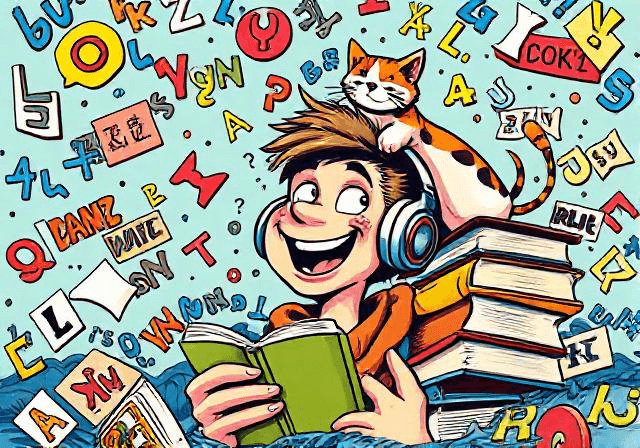
Let’s not beat around the bush: what’s the secret ingredient for learning any language? Immersion.
Yes, immersion. Surround yourself with your target language everywhere.
And I mean EVERYWHERE. Even in the places where kings go without a guard. The more you’re exposed, the faster you learn. Why? Because there’s no escape. Nowhere to hide. Alone, with nobody to help you? Even better. Pain is the gain. You’ll learn so fast that you won’t even have time to mutter “shiiiiiit.” Seriously, it’s like your brain got hit by a lightning bolt… repeatedly.
Been There, Done That
How do I know? Been there. 23 years old, alone in a foreign country, NOBODY spoke my language. I’d already failed English, German, and Russian at school. Total language dummy. Yet, thrown into immersion, I learned English so fast I barely had time to panic. I went from “I can barely order a latte” to “Wait, they actually understood me?” in record time.
Unlocking the Kids’ Success Code
My kids? Thrown by their cruel mother witch (no, not evil stepmother vibes) into a Spanish public school at ages 11 and 6. No mercy. It was April, Easter Monday. When the end-of-year results came back, expecting them to repeat the year—I had to eat my hat. They excelled. How?! Already bilingual, yes, but a 3rd language? Just like that? NOT FAIR. Was I jealous? Hell yes. Of my own kids? Double hell yes. I mean… who raised these geniuses? Apparently, me. Scary thought.
Of course, not every child learns this quickly. Take 11-year-old me struggling with German: 10 years of school, 0 results. Nada. Basically, a human potato with textbooks, crying into a dictionary.
The Magic Ingredient
Total immersion + fearlessness = magic.
Environment matters. Support matters. If someone slows down, helps you, waits for your confused brain to fish out the right words—you’re on your way. You’ll feel frustrated, mute, like words are doing somersaults in your mouth. I know. I did. A lot. I screamed. I cried. Into the pillow. I threatened my poor dog with verbal abuse. But it gets easier. Promise. You just have to be brave, speak, and be willing to be heard—make mistakes, listen, repeat.
Don’t get offended if someone corrects you—they’re doing you a favour. Many speakers keep making mistakes because they’re deaf to the clues. Don’t be deaf. Observe, repeat. That’s what kids do. I cracked their code. My kids are miles ahead—but I’m catching up. Slowly. Like a snail wearing roller skates.
How to Actually Immerse Yourself
Immersion doesn’t mean moving countries or marrying a native speaker (though… no judgement if that’s your thing). It means surrounding yourself with the language so it seeps into your brain whether it likes it or not.
Living with parents who are doing your head in? Pop in your headphones, smile politely, and say, “Sorry Mum, can’t hear you—I’m learning French.” Not only will she leave you alone, she might even be proud of you. Bonus: language learning, peace, and smug satisfaction all in one move.
Cheat Sheet: Immersion in Action
Now that you get the theory, here’s how to put immersion into action without losing your mind.
Listening → Podcasts, TV, audiobooks, or eavesdropping on the metro (free, awkward entertainment). Make it part of your routine. Start easy, then level up. Bonus points for pretending to understand locals while nodding like a tiny, confused bobblehead.
Speaking → Talk to humans. Or your cat. Or Bob the Bot. Loud and clear. Find a buddy, join a language exchange, pay for lessons if you can, use AI if you can’t. Don’t know what to talk about? Come on, is your life really that boring? Describe your breakfast. Complain about your neighbour’s obsession with garden gnomes. Share your existential dread. All valid.
Reading → Graded readers are gold. Unlike kids’ books (fairies and magic beans, hello), graded stories use words you’ll actually need in real life. I even read Don Quijote as a graded reader—who knew dusty classics could be hilarious and useful? When graded readers get “boring,” switch to real stuff. No excuses. Reading = vocabulary + grammar + expressions. Crack the code.
Writing → Message friends, rant to Bob the Bot… practice writing and therapy in one. Writing organises your thoughts, slows you down, and helps with grammar. Think of it as speaking on paper, plus bonus points for venting about your terrible boss, your neighbour’s cat, or your eternal bad luck in love.
✅ Do a bit of each every week. Listening, speaking, reading, writing. Together, they turn your brain into a language sponge. And probably a slightly crazier, more hilarious sponge, too.
Don’t Just Dip Your Toes—Dive In!
Immersion is just the beginning. Once you’ve got the hang of surrounding yourself with the language, it’s time to supercharge your skills with the other essential ingredients for language success.
Ready to level up? Check out my wild ride in Forget the Magic Formula to see how I hacked my own language learning recipe. Feeling your motivation wobble like a jelly on a trampoline? Recharge with chaos-proof tips in Motivation for Successful Language Learning and get your “keep going” superpowers. And if you want to enjoy reading while learning, dive into Graded Stories for Curious Minds—real stories that sneak vocabulary and grammar into your brain without you even noticing (like a ninja, but friendlier).
Mix magic ingredients into your own language learning cocktail, shake vigorously, and watch your skills grow faster than a cat chasing a laser pointer. Your brain will thank you. Probably.
